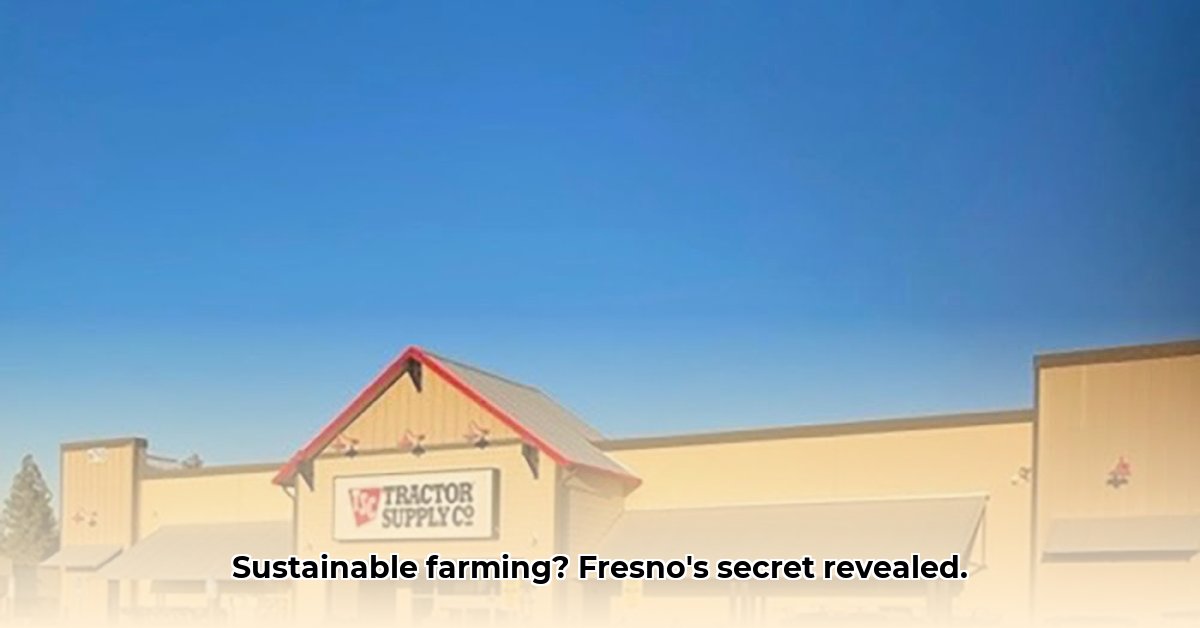
Assessing Tractor Supply's Role in Fresno's Sustainable Agriculture
Fresno Tractor Supply (FTS) serves as a major supplier for farmers in the region, offering a wide array of products from animal feed to organic seeds. This raises the question: To what extent does FTS actively contribute to sustainable agriculture practices in Fresno? While FTS provides convenient access to farming supplies, a comprehensive assessment reveals significant gaps in available information regarding their sustainability initiatives. For more information on Tractor Supply's sustainability efforts, see this detailed report. This article investigates FTS's current role and provides actionable recommendations for stakeholders to foster more sustainable practices.
What Fresno Tractor Supply Offers: A Product Overview
FTS boasts a broad inventory potentially supporting both conventional and sustainable farming methods. This includes seeds, fertilizers, tools, and livestock supplies. The convenience of procuring most necessities from a single location is undeniable. However, the proportion of sustainable products within this large selection remains unclear. A crucial gap in current knowledge resides in the lack of readily available data on the sourcing, manufacturing processes, and environmental impact of their products. This lack of transparency hinders a complete assessment of their contribution to sustainable agriculture.
The Sustainability Data Deficit: Unanswered Questions
Several critical data points are currently missing to fully evaluate FTS's commitment to sustainability:
- Supplier Vetting: What criteria does FTS use to select suppliers, considering their environmental and social responsibility? Are suppliers assessed for their sustainability practices? This information is critical to understand the upstream impact of FTS's supply chain.
- Product Sourcing: What percentage of FTS's products are sourced from sustainable or organic operations? Detailed information regarding their supply chain transparency is needed.
- Packaging and Waste Management: What steps are taken to minimize packaging waste and utilize eco-friendly materials? What is their waste management plan? These practices significantly influence the overall environmental impact.
- Sustainability Initiatives: Does FTS have specific sustainability goals or targets, such as reducing carbon emissions or promoting biodiversity? Are these publicly available and measurable?
Shining a Light: Necessary Information for a Complete Assessment
To comprehensively evaluate FTS's role, several critical data points must be collected and analyzed:
- Customer Surveys: Data on consumer purchasing habits—specifically, the relative frequency of purchasing sustainable products offered by FTS—would provide valuable insights into actual engagement with sustainable options. The percentage of farmers utilizing FTS for sustainable supplies would be a key metric.
- Supply Chain Transparency: A detailed examination of the entire supply chain, from sourcing to distribution, would highlight FTS's commitment and performance regarding environmentally responsible choices.
- Comparative Analysis: Comparing FTS’s practices with other local agricultural suppliers, regarding sustainability initiatives, would offer a valuable benchmark against industry peers and community standards.
The Path Forward: Collaborative Steps Toward Sustainability
Achieving sustainable agriculture in Fresno requires a multi-stakeholder effort. The following recommendations outline actionable steps for each key player:
Actionable Steps for Enhanced Sustainability:
Fresno Tractor Supply: Conduct comprehensive customer surveys on utilization of sustainable products (within 1 year). Publish a transparent sustainability report outlining sourcing, waste reduction targets, and future plans (within 3 years). This report should include measurable goals, timelines, and progress updates. (Efficacy: Improved brand reputation, increased consumer trust, strengthened stakeholder relationships)
Local Farmers: Actively seek and purchase sustainable supplies from FTS, while simultaneously supporting local, environmentally conscious suppliers. (Efficacy: Direct support for sustainable farming practices, reduction of environmental footprint)
Consumers: Make conscious purchasing choices, prioritizing products with verified sustainability certifications (e.g., USDA Organic). Advocate for greater transparency from FTS and other retailers, demanding detailed information on product sourcing and sustainability practices. (Efficacy: Market signal for increased demand for sustainable products, pressure on retailers to improve practices)
Local Government: Implement policies supporting collaboration between FTS and local farmers committed to sustainability. Provide financial incentives for adopting sustainable farming methods. (Efficacy: Fosters a supportive environment for sustainable agriculture, creates financial viability for eco-friendly practices)
Building a Sustainable Future: Transparency as a Cornerstone
While the current role of FTS in Fresno's sustainable agriculture remains partially obscured by a lack of readily available data, the potential for positive change is significant. A collaborative approach emphasizing transparency, data-driven decision-making, and a shared commitment to environmental stewardship is critical to fostering a more sustainable agricultural future in the Fresno region. Greater transparency and active engagement from all stakeholders are essential to achieve this shared vision.